
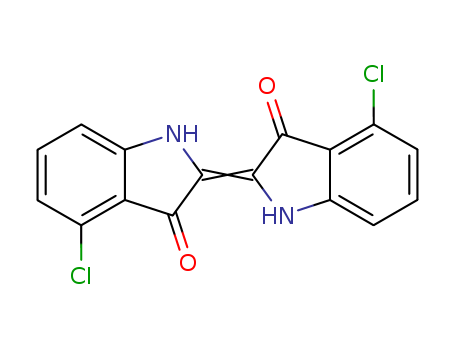
4-chloro-2-(4-chloro-1,3-dihydro-3-oxo-2H-indol-2-ylidene)-1,2-dihydro-3H-indol-3-one
- Name: 4-chloro-2-(4-chloro-1,3-dihydro-3-oxo-2H-indol-2-ylidene)-1,2-dihydro-3H-indol-3-one
- CAS: 6275-44-1
- Purity: 99%
Details
4-chloro-2-(4-chloro-1,3-dihydro-3-oxo-2H-indol-2-ylidene)-1,2-dihydro-3H-indol-3-one 6275-44-1 with purity >99% Low price in stock
- Molecular Formula: C16H8 Cl2 N2 O2
- Molecular Weight: 331.158
- Vapor Pressure: 9.37E-09mmHg at 25°C
- Boiling Point: 463.1°C at 760 mmHg
- Flash Point: 233.9°C
- PSA: 58.20000
- Density: 1.584g/cm3
- LogP: 4.39760
4-chloro-2-(4-chloro-1,3-dihydro-3-oxo-2H-indol-2-ylidene)-1,2-dihydro-3H-indol-3-one(Cas 6275-44-1) Usage
|
General Description |
4-chloro-2-(4-chloro-1,3-dihydro-3-oxo-2H-indol-2-ylidene)-1,2-dihydro-3H-indol-3-one is a complex chemical compound with a molecular formula C16H10Cl2N2O2. It is a yellowish solid with a molecular weight of 333.17 g/mol. 4-chloro-2-(4-chloro-1,3-dihydro-3-oxo-2H-indol-2-ylidene)-1,2-dihydro-3H-indol-3-one is a derivative of indole and contains two chlorine atoms. It is used in research and development in the pharmaceutical industry, and its potential applications include being used as a fluorescent labeling reagent for biological imaging and as a building block for the synthesis of various organic compounds. Its unique structure and properties make it a valuable chemical for scientific investigation and product development. |
InChI:InChI=1/C16H8Cl2N2O2/c17-7-3-1-5-9-11(7)15(21)13(19-9)14-16(22)12-8(18)4-2-6-10(12)20-14/h1-6,19-20H
6275-44-1 Relevant articles
High-Performance Ambipolar Polymers Based on Electron-Withdrawing Group Substituted Bay-Annulated Indigo
Yang, Jie,Jiang, Yaqian,Tu, Zeyi,Zhao, Zhiyuan,Chen, Jinyang,Yi, Zhengran,Li, Yifan,Wang, Shuai,Yi, Yuanping,Guo, Yunlong,Liu, Yunqi
, (2019/01/05)
For donor–acceptor conjugated polymers, ...
Exploring the biocatalytic scope of a bacterial flavin-containing monooxygenase
Rioz-Martinez, Ana,Kopacz, Malgorzata,De Gonzalo, Gonzalo,Torres Pazmino, Daniel E.,Gotor, Vicente,Fraaije, Marco W.
experimental part, p. 1337 - 1341 (2011/04/23)
A bacterial flavin-containing monooxygen...
Styrene monooxygenase from Pseudomonas sp. LQ26 catalyzes the asymmetric epoxidation of both conjugated and unconjugated alkenes
Lin, Hui,Qiao, Jing,Liu, Yan,Wu, Zhong-Liu
experimental part, p. 236 - 241 (2011/02/22)
A novel styrene monooxygenase (SMO) was ...
6275-44-1 Process route
-
-
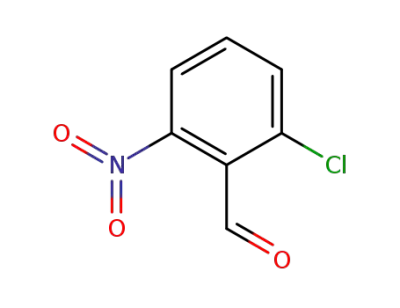
6361-22-4
2-chloro-6-nitrobenzaldehyde

-
-
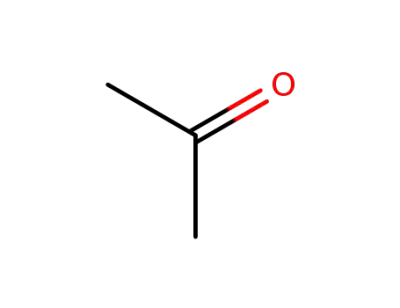
67-64-1
acetone

-
-
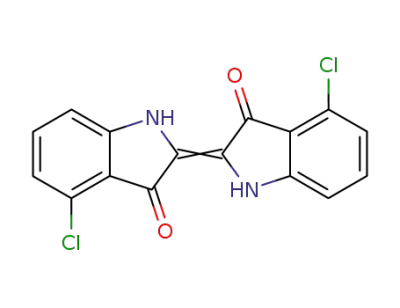
6275-44-1
4,4'-diCl-indigo
| Conditions | Yield |
|---|---|
|
With
sodium hydroxide;
|
|
|
With
sodium hydroxide;
4,4'-dichloro-indigo;
|
|
|
With
sodium hydroxide;
|
|
|
With
sodium hydroxide;
In
water;
|
-
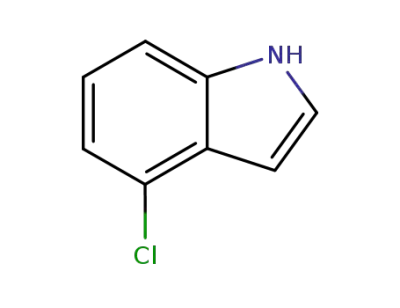
-
25235-85-2
4-chloro-1H-indole
-
-
6275-44-1
4,4'-diCl-indigo
| Conditions | Yield |
|---|---|
|
With
sodium phosphite; NADPH; sodium chloride;
at 25 ℃;
for 18h;
pH=8.5;
aq. buffer;
Enzymatic reaction;
|
6275-44-1 Upstream products
-
6361-22-4
2-chloro-6-nitrobenzaldehyde
-
67-64-1
acetone
-
25235-85-2
4-chloro-1H-indole
-
114382-39-7
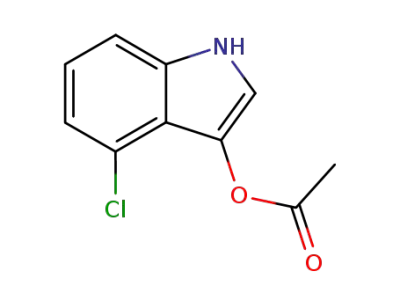
acetic acid-(4-chloro-indol-3-yl ester)
Related Products
-
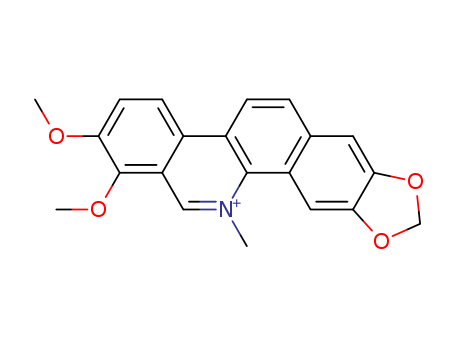 Chelerythrine Chloride
CAS:34316-15-9
-
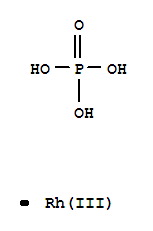 Rhodium phosphate
CAS:67859-71-6
-
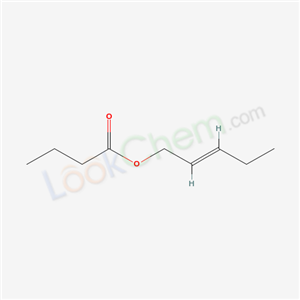 (E)-pent-2-enyl butyrate
CAS:42125-30-4
-
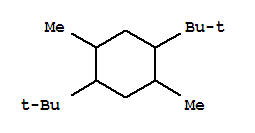 1,4-bis(1,1-dimethylethyl)-2,5-dimethylcyclohexane
CAS:94107-84-3